
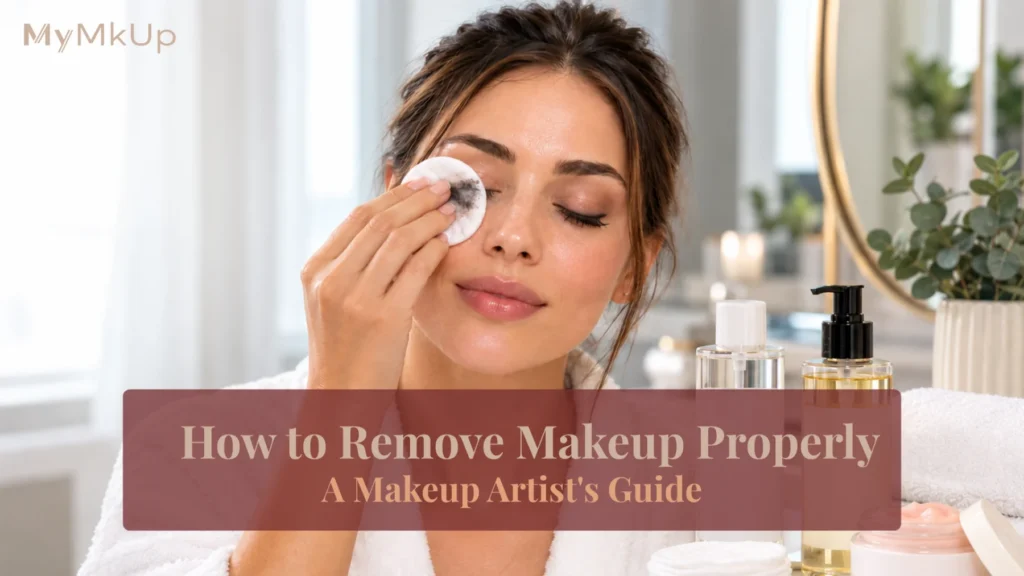
Wondering how to remove makeup properly? Dissolve it first, then cleanse. Hold a soaked pad on the closed eye for several seconds and wipe gently. Take off face makeup with a balm, oil, micellar water or remover, then cleanse as needed with lukewarm water. Pat dry, moisturize, and never rub or tug at your skin or lashes.
That sounds simple, but this is the step where most people go wrong. Foundation, sunscreen, waterproof mascara, eyeliner and long-wear formulas are made to survive sweat, heat and a full day of touching your face, so the usual reaction is to rub harder. That rarely helps. It irritates the skin, pulls at your lashes and still leaves product behind. When the right product gets a few seconds to break makeup down, most of the work is done before you apply any pressure.
The best method depends on what you are wearing, how long it has been on and how your skin behaves. This guide, written by the makeup artists at MyMkUp, starts with a simple nightly routine, then covers removal methods, eye makeup, skin types, lash extensions, what to do when you have no makeup remover and the mistakes that cause the most trouble.
To remove makeup properly, hold a soaked pad over the closed eye for several seconds, then wipe gently. Remove face makeup with a balm, oil, micellar water, or suitable makeup remover, then cleanse as needed with lukewarm water. Pat dry and moisturize. Never rub or tug at the skin or lashes.
How to Remove Makeup Properly: Step-by-Step Routine
This routine works for most nights. Change the products to match your makeup, but keep the order.
These are two separate jobs. Some products do both, but after a full face of makeup you usually need a step for each.
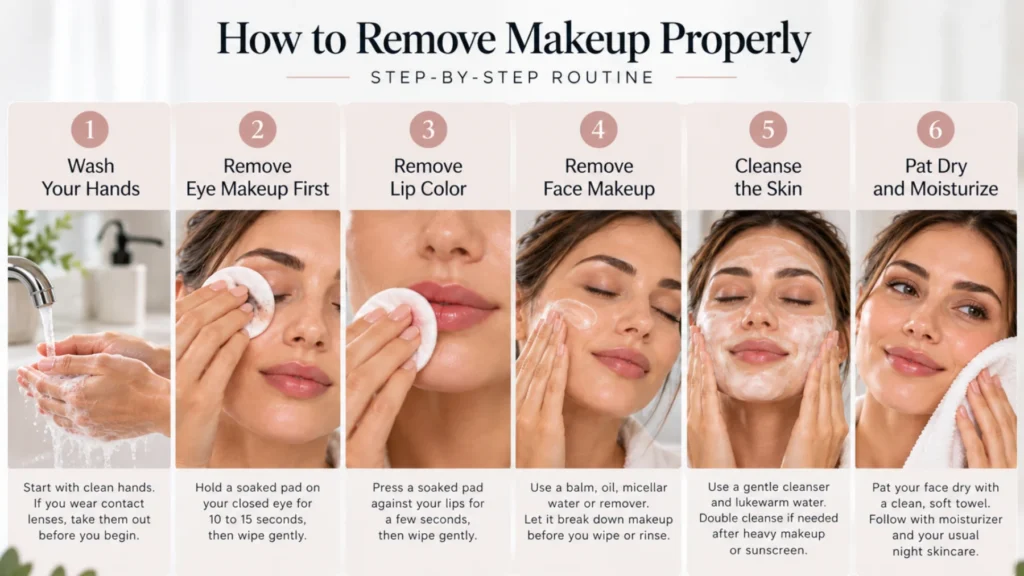
Step 1: Wash Your Hands
Start with clean hands. Everything on your fingers ends up on your face and near your eyes. If you wear contact lenses, take them out before you begin.
Step 2: Remove Eye Makeup First
Soak a cotton pad with an eye makeup remover that suits your makeup. Close your eye and hold the pad against the lid for 10 to 15 seconds so mascara and eyeliner have time to loosen. Then wipe gently. Do not scrub back and forth or pull at the skin. For waterproof formulas, see the eye makeup section below.
Step 3: Remove Lip Color
Press a soaked pad against your lips for a few seconds, then wipe. This works for lipstick, liquid lipstick and lip liner. Long-wear formulas need more time to break down, so hold the pad a little longer instead of scrubbing your lips.
Step 4: Remove Face Makeup
Use a makeup remover, micellar water, cleansing balm or cleansing oil, depending on how much you are wearing. Work across your forehead, cheeks, nose, chin and jawline with light pressure. Let the product loosen the makeup before you wipe or rinse.
If you wear eyelash extensions, avoid oil-based products around your eyes, because oil can weaken the lash adhesive. Details are in the lash extensions section below.
Step 5: Cleanse the Skin When Needed
For light makeup, one good cleanse is often enough. After heavy makeup, long-wear formulas or a lot of sunscreen, a second cleanse removes what the first step left behind. To check, wipe a cotton pad over your face after the first cleanse. If it picks up color or residue, cleanse again. Double cleansing is not a nightly requirement for everyone, and the double cleansing section below explains when it helps.
The American Academy of Dermatology recommends a gentle, non-abrasive cleanser without alcohol, applied with your fingertips and rinsed with lukewarm water. Skip washcloths and scrubbing.
Step 6: Pat Dry and Moisturize

Use a clean, soft towel and pat your face dry. Rubbing irritates the skin. Follow with moisturizer and the rest of your usual night skincare. If your skin feels irritated after removing makeup, skip exfoliants and strong active products for the night.
Best Way to Remove Makeup
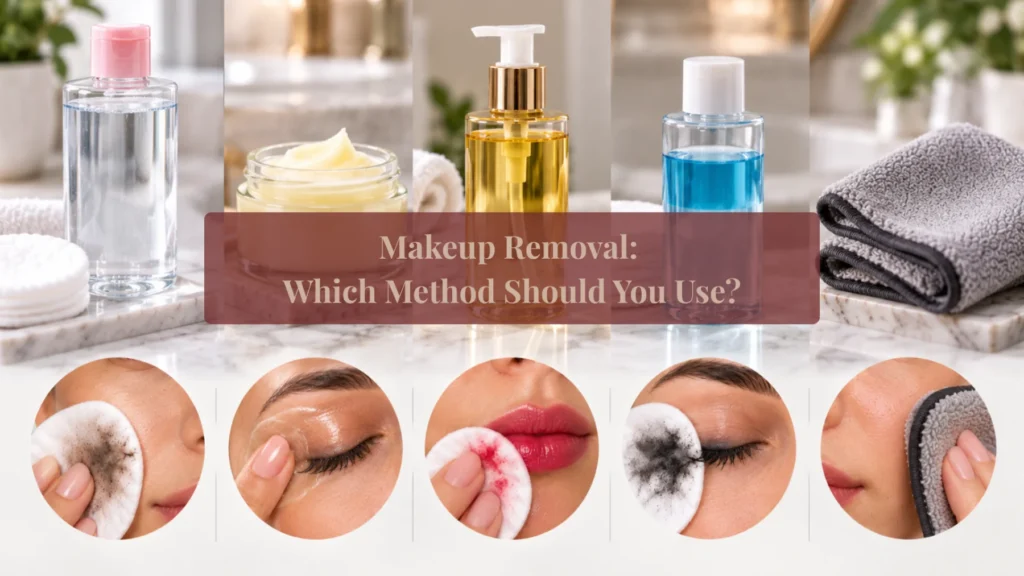
The best way to remove makeup is to dissolve it first with a balm, oil, micellar water or a dedicated remover, then cleanse your skin with a gentle cleanser and lukewarm water. Which product you pick depends on what you are wearing, your skin type and how much makeup needs to come off.
Cleansers that remove makeup fall into two groups. Balms, oils, micellar water and dedicated makeup removers break makeup down first. Gel, foam and cream cleansers handle the cleansing step afterward. Some products do both jobs depending on the formula, which is why heavier makeup often calls for one of each.
1. Micellar Water and Liquid Makeup Removers
Micellar water is water with tiny clusters of mild cleansing molecules. Those clusters attach to makeup, oil and dirt so a cotton pad can lift them off. It works well for light everyday makeup, quick removal and many eye makeup formulas, and fragrance-free versions can suit sensitive skin. Heavy or waterproof makeup may need something stronger.
Soak the pad instead of just dampening it, hold it on the skin briefly, then sweep gently. If makeup is still coming off, repeat with a clean side of the pad. Do not press harder.
Does Micellar Water Remove Makeup?
Yes, it removes many types of makeup. Cleveland Clinic dermatologist Dr. Alok Vij says it can remove most makeup and some waterproof cosmetics, but not every kind. Waterproof mascara and heavy long-wear makeup often need an oil-based product or a second cleanse.
A dermatologist interviewed by CBS Pittsburgh also noted that micellar water can leave a thin oily sheen on the skin, so a quick face wash afterward helps if your skin feels coated.
2. Cleansing Balm
A cleansing balm has a thick, solid texture that melts into an oil when you massage it into your skin. The oils dissolve makeup and sunscreen, which is why balms work well on full-face makeup, long-wear foundation and waterproof formulas.
Apply it to dry skin with dry hands and massage gently for about a minute. Add a little water, then rinse thoroughly.
Best for:
- Full-face makeup
- Waterproof makeup
- Long-wear foundation
- Heavy sunscreen
Note: Avoid cleansing balms around eyelash extensions unless the product is confirmed as extension-compatible.
3. Cleansing Oil
Cleansing oil works on a simple idea: oil dissolves oil-based makeup and sunscreen. That is why it handles waterproof mascara, long-wear foundation and heavy SPF well. It also lifts excess oil from the skin.
Massage it onto dry skin, add water until it turns milky, then rinse thoroughly. Oily skin does not automatically rule out oil cleansers. Many people with oily skin use them without trouble, as long as the formula rinses off clean.
Best for:
- Everyday makeup
- Waterproof makeup
- Long-wear makeup
- Dry skin
Note: Avoid oil-based products around eyelash extensions unless they are confirmed as compatible.
4. Double Cleansing
Double cleansing means washing in two steps. The first cleanse, usually a balm, oil or micellar water, breaks down makeup, sunscreen and oil. The second, a gentle water-based cleanser, removes leftover residue and anything the first step missed.
It helps most on days you wear heavy makeup, long-wear formulas or plenty of sunscreen. It is not a requirement. A dermatologist at Cleveland Clinic says washing once thoroughly with a gentle cleanser is enough for most people, and that dermatologists worry more about over-washing than about people skipping a second cleanse.
How to Know If You Need a Second Cleanse
- Makeup or sunscreen residue remains after the first cleanse.
- Your skin still feels coated.
- You regularly wear heavy or long-wear makeup.
- You regularly wear a lot of sunscreen.
A quick test: after your first cleanse, wipe a cotton pad over your face. If it picks up color or residue, cleanse again.
5. Makeup Removal Cloths
Reusable microfiber cloths are handy for travel and for nights when carrying several products is a hassle. Wet the cloth, press it gently against your skin and wipe with light pressure. A soft cloth still causes friction if you scrub, so the same rules apply. Wash the cloth regularly and replace it when it wears out or stops coming clean.
Disposable makeup wipes are a different thing. Dermatologists interviewed by TODAY say wipes can start the cleansing process but do not replace washing, and heavy or rough use can cause irritation and dryness. Follow them with a face wash.
How to Remove Eye Makeup, Mascara and Eyeliner
The skin around your eyes is thin and your lashes are delicate. Go slower here than on the rest of your face.
The Simple Eye Makeup Removal Technique
- Soak a cotton pad with an eye makeup remover that suits your makeup.
- Close your eye and hold the pad over it for 10 to 15 seconds.
- Sweep gently downward and outward.
- Use a fresh section of the pad, or a new pad, when it picks up color.
- Check the lash line for leftover product.
- Never pull or tug at your lashes.
How to Take Off Mascara, Including Waterproof Mascara
For regular mascara, soften it first with a soaked pad, then wipe gently from the roots to the tips.
Waterproof mascara is built to resist water, so soap and water alone barely touch it. Oil dissolves the waxes and polymers that make it water-resistant, which is why an oil-based or bi-phase remover works best. Press a soaked pad against your closed lashes for 15 to 20 seconds, then wipe from the roots to the tips in one downward stroke. Repeat if needed. Rubbing or tugging at mascara before it has dissolved can contribute to lash breakage or loss.
Avoid rubbing back and forth along the lash line.
How to Remove Eyeliner
Work carefully along the lash line. A cotton swab helps with small areas and the outer wing. Waterproof eyeliner needs an oil-based or bi-phase remover and a bit more time. Hold the swab or pad against the liner for a few seconds before wiping, and avoid back and forth rubbing.
Removing Eye Makeup With Eyelash Extensions
Oil is the main thing to avoid. Lash professionals note that oil dissolves the cyanoacrylate adhesive most extensions rely on, so oil-based removers, cleansing balms, cleansing oils and some micellar waters can shorten how long your extensions last.
Use an oil-free micellar water or a lash cleanser made for extensions. Apply it with a soft brush or a lint-free applicator using light downward strokes. Do not rub, pull or tug. Skip waterproof mascara unless your lash technician recommends it, and follow their aftercare advice, since adhesives and rules vary.
Makeup Remover for Your Skin Type
How your skin reacts to cleansing changes which remover works best.
Makeup Remover for Sensitive Skin
Look for gentle formulas, and choose fragrance-free products if fragrance tends to bother your skin. Use light pressure, since friction is often the main irritant, and take extra care around the eyes. Test any new product on a small area, such as your jawline, before using it on your whole face.
Best Makeup Remover for Acne-Prone Skin
When choosing the best makeup remover for acne prone skin, look for light formulas labeled non-comedogenic, oil-free or “won’t clog pores.” Choose something that removes makeup thoroughly without leaving heavy residue or encouraging extra friction. The American Academy of Dermatology advises people with acne-prone skin to remove all makeup, eye makeup included, before bed with an oil-free remover, then wash with a gentle cleanser and avoid scrubbing.
A makeup remover does not treat acne. Thorough but gentle cleansing does more for your skin than aggressive scrubbing.
Makeup Removal for Dry Skin
Avoid harsh foaming cleansers that leave your skin tight. Balm and oil-based products feel comfortable on many dry skin types. Do not cleanse more often than you need to, and moisturize afterward.
Makeup Removal for Oily Skin
Remove makeup and excess oil thoroughly, then choose a cleanser made for oily skin. Squeaky clean does not mean better. A tight, stripped feeling usually means you have gone too far, and over-cleansing can leave skin irritated.
How to Remove Makeup Without Makeup Remover
Running out of remover happens. If you are wondering how to take off makeup without makeup remover, you have options, and the right one depends on what you are wearing.
What can you use if you don’t have makeup remover? A cleansing oil or balm, micellar water or a gentle facial cleanser can each do the job. For waterproof makeup, an oil-based product works better than scrubbing with water. Skip dish soap, hand soap and anything else not made for your face, and follow oil-based products with a face wash so no residue stays behind.
How to Remove Mascara Without Makeup Remover
If you are figuring out how to take off mascara without makeup remover, start by softening it. Hold a warm, damp cloth over your closed eye for about 30 seconds. Then put a small amount of oil or a gentle cleansing product on a cotton pad, hold it against your lashes for several seconds and wipe from the roots to the tips. Keep the oil off the surface of your eye. Never pull or scrub.
On a rushed night, the rule for how to remove mascara without makeup remover stays the same: soften it, give a little oil time to work on the lashes, then wipe gently and repeat if needed.
Waterproof Mascara Without Makeup Remover
Water will not move waterproof mascara, so use an oil-based approach. Press a cotton pad with a little oil or balm against your closed lashes and give it time to work. Wipe gently from the roots to the tips, then finish with a gentle cleanse. If you need to remove waterproof mascara without makeup remover, patience does what pressure cannot.
How to Remove Eyeliner Without Makeup Remover
Dip a cotton swab lightly in a little oil or micellar water and roll it along the lash line instead of dragging it. Hold it on the liner for a few seconds before you wipe. Waterproof liner needs oil and a bit more time. Avoid back and forth rubbing.
Natural Makeup Remover Options
Natural does not always mean gentle or suitable. Plant oils can dissolve makeup, but they do not suit every skin type. Coconut oil is a common choice, and it can clog pores for some people, especially if you are prone to acne. Oils such as jojoba tend to score lower on comedogenic scales, though skin varies. Patch test first, especially near the eyes, rinse well and follow with a cleanser. Avoid oil-based options around eyelash extensions.
DIY Makeup Remover: What to Know
The simplest DIY makeup remover is a single oil applied with a cotton pad. It needs no other ingredients. Mixes that contain water, such as oil, water and shampoo blends, have no preservatives, so bacteria can grow in the bottle. If you make one, use a clean container, make a very small batch and discard it promptly rather than storing it for extended use. Keep homemade mixes away from the eyes unless the ingredients and method are known to be eye-safe.
Never use household cleaners, dish soap or anything not meant for your face. Formulated products cost more, but they are designed and tested for stability and safety, so results are more predictable
What Happens If You Don’t Remove Makeup Properly?
Makeup, sunscreen, oil, sweat and pollution stay on your skin through the night. Your skin is still exposed to makeup, sunscreen, oil and sweat while you sleep. You do not need a perfect routine, but removing makeup before bed helps keep the skin and eye area clean. A consistent, gentle routine matters more than aggressive cleansing.
Is It Bad to Sleep With Makeup On?
Sleeping in makeup once in a while will not ruin your skin. Doing it regularly is not a good idea. According to a dermatologist quoted by Marie Claire UK, makeup traps oil, sweat and pollution against your skin overnight, which can clog pores, contribute to breakouts and leave skin looking dull.
Eye makeup needs extra attention. Dermatologist Dr. Hadley King told Makeup.com that sleeping in eye makeup can cause irritation, allergic reactions and, in more serious cases, infections. She also notes that mascara can stiffen lashes so they snap against the pillow.
The American Academy of Dermatology advises people with acne-prone skin to remove all makeup before bed, eye makeup included, and recommends washing your face twice a day and after sweating.
If you do fall asleep in makeup:
- Remove it gently in the morning.
- Cleanse.
- Moisturize.
- Do not make up for it with hard scrubbing or heavy exfoliation.
Common Makeup Removal Mistakes to Avoid
- Scrubbing hard. Friction irritates skin and does not lift makeup any faster.
- Using too little remover and making up for it with pressure. Soak the pad.
- Rubbing the eye area again and again.
- Pulling at your eyelashes.
- Using hand soap or dish soap on your face. They are not made for facial skin and can dry and irritate it.
- Assuming one cleanser removes every type of makeup.
- Leaving waterproof makeup or visible residue behind.
- Using dirty reusable pads or cloths.
- Over-cleansing.
- Regularly sleeping in makeup.
- Assuming every natural ingredient suits every skin type.
How to Choose the Right Makeup Removal Method
| Your Situation | Method to Consider |
| Light everyday makeup | Micellar water or gentle cleanser |
| Full-face makeup | Makeup remover, cleansing balm, or cleansing oil |
| Waterproof makeup | Cleansing oil or balm |
| Heavy sunscreen and makeup | Oil or balm followed by cleansing |
| Eyelash extensions | Extension-compatible, oil-free cleanser |
| No makeup remover | Cleansing oil or balm, or a gentle cleanser |
| Travel or in a pinch | Micellar water or suitable removal cloth |
Final Thoughts
Makeup comes off best when you dissolve it instead of scrubbing it. Pick a method that fits what you are wearing and how your skin behaves, give waterproof products and the eye area extra time, and cleanse only as much as you need before moisturizing. A few seconds of patience saves your skin and your lashes a lot of friction.
Want personalized makeup removal guidance?
Book a live session with a MyMkUp makeup artist and get advice based on your own makeup routine, products and needs.
Frequently Asked Questions About Removing Makeup
What can I use if I don’t have makeup remover?
A cleansing oil or balm, micellar water or a gentle facial cleanser can work, depending on your makeup. For waterproof makeup, press a cotton pad with a little oil against your skin or lashes for several seconds, wipe gently and follow with a face wash. Avoid dish soap and hand soap, and skip oil-based products if you wear eyelash extensions.
What is the gentlest way to remove makeup?
Use a fragrance-free micellar water or a mild cleanser, press a soaked pad on your skin instead of rubbing, then rinse with lukewarm water and pat dry. Light pressure matters as much as the product.
What do dermatologists recommend to remove makeup?
The American Academy of Dermatology recommends a gentle, non-abrasive cleanser without alcohol, applied with your fingertips and rinsed with lukewarm water, with no scrubbing. It also advises washing twice a day and after sweating.
What happens if you don’t remove makeup at night?
Makeup, oil and dirt stay on your skin for hours. Doing this regularly can contribute to clogged pores, breakouts, dullness and irritation, and eye makeup can flake into your eyes. An occasional slip is unlikely to cause lasting harm.
How do I remove makeup with eyelash extensions?
Use an oil-free micellar water or a lash cleanser made for extensions, apply it with a soft brush and do not rub or pull. Oil breaks down lash adhesive, so avoid balms and oils around your eyes.
How do I remove mascara without makeup remover?
Soften it first, then hold a cotton pad with a small amount of oil against your lashes and wipe from the roots to the tips without scrubbing. Follow with a gentle cleanse, and skip oil-based products around the eyes if you wear lash extensions.
Does micellar water remove makeup?
It removes many types of makeup, especially light everyday makeup. It may struggle with waterproof mascara and heavy long-wear formulas, and a face wash afterward helps if your skin feels coated.
How do I remove eyeliner without makeup remover?
Roll a cotton swab lightly dipped in a little oil or micellar water along the lash line and hold it briefly before wiping. Waterproof eyeliner needs oil and more time. Avoid back and forth rubbing.
Should I remove eye makeup first?
Yes. Removing eye makeup first stops mascara and eyeliner from smudging across clean skin while you cleanse your face. Hold a soaked pad on the closed eye for 10 to 15 seconds, wipe gently, then move on to your lips and face.
Do I need to wash my face after using micellar water?
Not always. Micellar water is a no-rinse product, so it can be enough after light makeup. After heavier makeup, or if your skin feels coated, follow with a gentle face wash and lukewarm water.
How long should I leave makeup remover on?
For eye makeup, hold the pad on the closed eye for 10 to 15 seconds, or 15 to 20 seconds for waterproof mascara. For the face, massage a balm or oil into your skin for about a minute before adding water and rinsing.