
By Kelly Dolev, Founder of MyMkUp
Makeup for interview day is not office makeup. Office makeup is the look you wear every week and nobody studies. A job interview is one hour, one room, and a person deciding about you while you talk. The brief is narrower, and the mistakes are different.
Should you wear makeup to a job interview at all?
There is no rule anywhere that says you must. Plenty of people interview bare-faced and get the job, and an interviewer who would hold it against you has told you something useful about the place.
The honest reason most people do wear it is confidence. If knowing your face is settled means you think about the answers instead of your skin, that is worth an hour of preparation. If makeup makes you self-conscious, skip it. Half-committing is the worst of both.
What does a professional interview makeup look actually involve?
Business professional makeup is a narrow band, and it is narrow on purpose. Five things carry it:
- Base. Even rather than flawless. Coverage where you need it, skin where you do not.
- Brows. Groomed and filled to their own shape. Brows frame the face on video more than anything else.
- Eyes. One neutral shade across the lid, a thin line if you want definition, one coat of mascara.
- Cheek. A soft flush so you do not read as flat under office lighting.
- Lip. Your own color, slightly better. A balm, a tint, or a muted rose.
That is the whole list. If you find yourself reaching for a sixth thing, it usually belongs to a different occasion.
What should you skip?
Glitter and heavy shimmer catch overhead light in a way that reads as evening. Strong contour looks sculpted in a mirror and muddy across a desk. A bold lip is a commitment for an hour of talking, and a coffee. False lashes are one more thing that can go wrong at the wrong moment.
The test is simple. If you would need to check it in a bathroom mirror halfway through, it is the wrong choice for a job interview.
What holds up through a stressful hour?
Interview nerves mean warmth, and warmth means shine and slip. The instinct is to build more product on top. It is the wrong instinct, because a thick base is exactly what separates when skin gets warm.
Thin layers, properly set, outlast a heavy base every time. A primer helps only if it suits your skin, and a mattifying one on dry patches makes the problem worse rather than better. Do not over-strip your skin the morning of either, especially if you are oily. The American Academy of Dermatology notes that a face wash that is too harsh can irritate skin and trigger more oil production, which is the opposite of what you want an hour before you walk in.
Does a video interview change anything?
A camera sees differently from a person across a desk. Three adjustments do most of the work.
Take the shine down further than feels right, because the screen will find it. Add a little more definition to brows and lashes, since a low-resolution webcam eats detail and flattens features. And check yourself in the actual software you will be using, in the actual light, rather than in a mirror. Room light decides more than product does. The specifics for a call are covered in the guide on makeup that reads on a video call.
Does it change by industry?
A business interview at a law firm and a first meeting at a studio are not the same room. If the company posts photographs of its people, that is your reference, and it is better than any general rule.
Where you have no information, take the plainer option. Being slightly underdone is invisible. Being overdone is not, and it is the only one of the two that becomes a talking point afterwards.
When no makeup is the right answer
If you have a reaction, a breakout that is sore, or a new product you have not worn before, the interview morning is the wrong moment for any of it. Bare skin and a clear head beats a base you are worried about. This applies more often than people admit, and nobody has ever lost an offer over a clean face.
What should the morning look like?
Wash, moisturize, and let it settle properly before anything goes on top. Base, brows, eyes, cheek, lip, in that order. Blot rather than powder if you get warm. Put one blotting paper and your lip product in a pocket, and leave the rest at home.
If the interview is the biggest one you have had in a while, do a practice run on a normal day first. Not the night before, when a reaction has nowhere to go. A week out, so anything that does not work has time to be changed. Everything else about the office look, week to week, sits on the work and interview sessions page.
Can you get an artist to walk you through it?
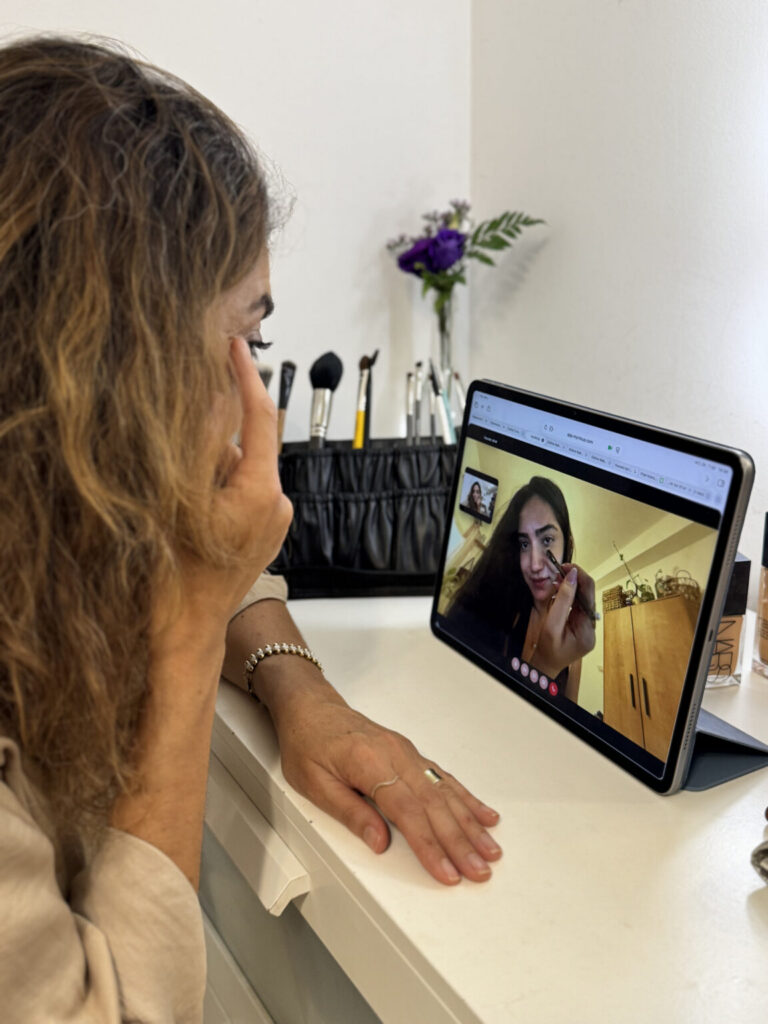
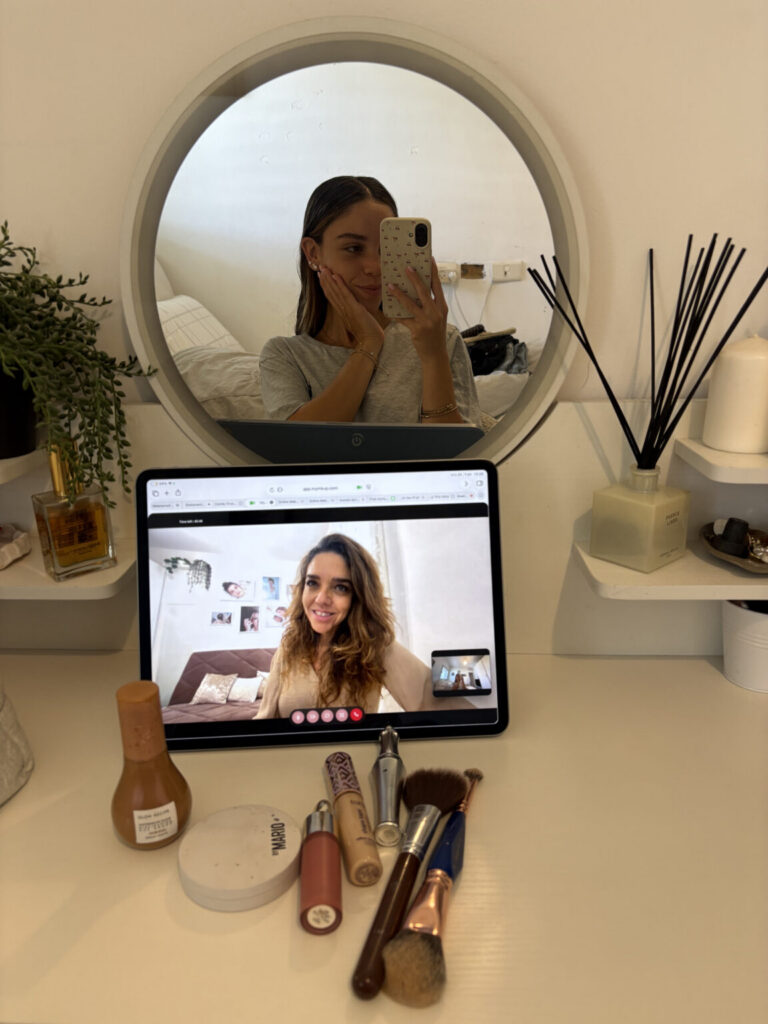
You pick an artist from their profile and book a slot on their calendar 1 to 2 days ahead. The session runs 1 hour or 1.5 hours. They see your face, your products and the light in your room, and guide each step as it happens. It is a live session with a real person, not pre-recorded content.
For an interview specifically, the useful part is not being shown a look and left to copy it. You can ask questions, adjust your application in real time, and get guidance based on your own products and features. After the interview, knowing How to Remove Makeup Properly can also help you take off your makeup thoroughly without unnecessarily irritating your skin.
Frequently Asked Questions
Should you wear makeup to an interview?
It is never required and no employer expects it. Most people wear it because it steadies them. If it has the opposite effect on you, go without. A half-finished face is worse than either.
What makeup is best for a video interview?
Less shine and slightly more definition than you would wear in person. A webcam flattens features and finds every highlight. Check yourself in the software you will actually use, in the light you will actually sit in.
How much makeup is too much for a job interview?
If someone would notice the makeup before they notice you, it is too much. Glitter, heavy contour, a bold lip and false lashes all cross that line in an office setting.
What lipstick color works for an interview?
Something within a shade or two of your own lips. A balm, a tint or a muted rose. Strong reds and dark shades need maintenance across an hour of talking, which is attention you would rather spend elsewhere.
Does interview makeup differ from everyday work makeup?
Yes. Work makeup is the look nobody studies, worn every week. An interview is one hour in front of a person forming an opinion, so it is simpler, more neutral, and built to need no checking.